Product Capabilities
This page summarizes what ENP can do from the point of view of an end user.
If you are still learning the product, read this page as a map of capabilities, not as a required reading sequence. For hands-on learning, start with Start Here.
Capability Overview
ENP supports four broad kinds of work:
1. Build and maintain network designs
- Create and organize designs
- Add nodes, links, and controllers
- Inspect properties in visual and table-based views
- Import and export design-related information
2. Run simulations
- IGP and BGP routing simulation
- MPLS-TE, VPN, multicast, and QoS analysis
- Optical transport and optical signal performance simulation
- Failure and resilience analysis
3. Analyze traffic and evolution
- Traffic monitoring views
- Traffic forecasting based on historical information
- Capacity planning and bottleneck analysis
- What-if comparisons before and after changes
4. Work across multiple technology layers
- IP and transport analysis in the same model
- Multi-vendor environments
- Integration with controllers, NMS, OSS, and related systems
- Cross-layer resilience and design decisions
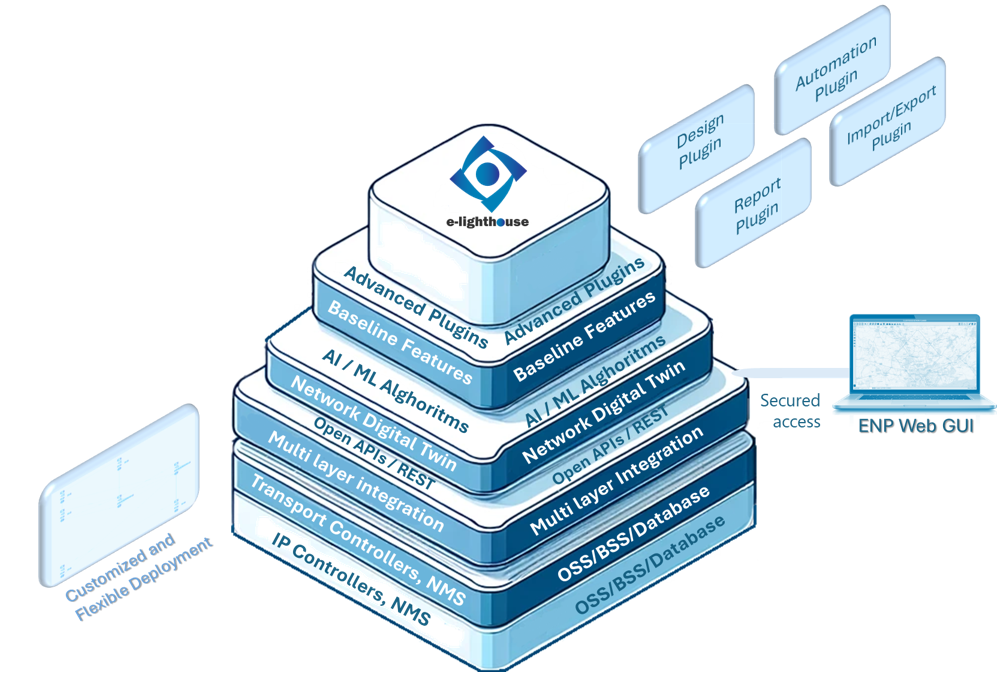
What This Means In Practice
Here are typical questions ENP helps answer:
- What happens if a link, node, or shared risk group fails?
- Can the current design absorb forecasted traffic growth?
- Which routes or paths are chosen under current policies?
- How do controller-imported topologies fit into the overall model?
- Where are the bottlenecks or weakest points in the design?
Main Capability Areas
IP Network Capabilities
ENP can simulate and analyze:
- IGP and BGP routing behavior
- MPLS-TE and segment-routing-related behavior
- L2/L3 VPN services
- IP multicast
- IP QoS classes and policy impact
- IP traffic monitoring and forecasting
Start here: Network Digital Twin overview
Transport Network Capabilities
ENP can also model and analyze:
- OTN and DWDM structures
- optical service layers such as ODU, OTU, OCh, and WDM elements
- optical signal performance and impairments
- transport-side provisioning and risk analysis
Multi-Layer Capabilities
ENP is especially strong when the answer depends on more than one layer:
- combined IP and transport analysis
- service impact of lower-layer failures
- cross-layer recovery and risk evaluation
- topology ingestion from external controllers
Integration and Customization
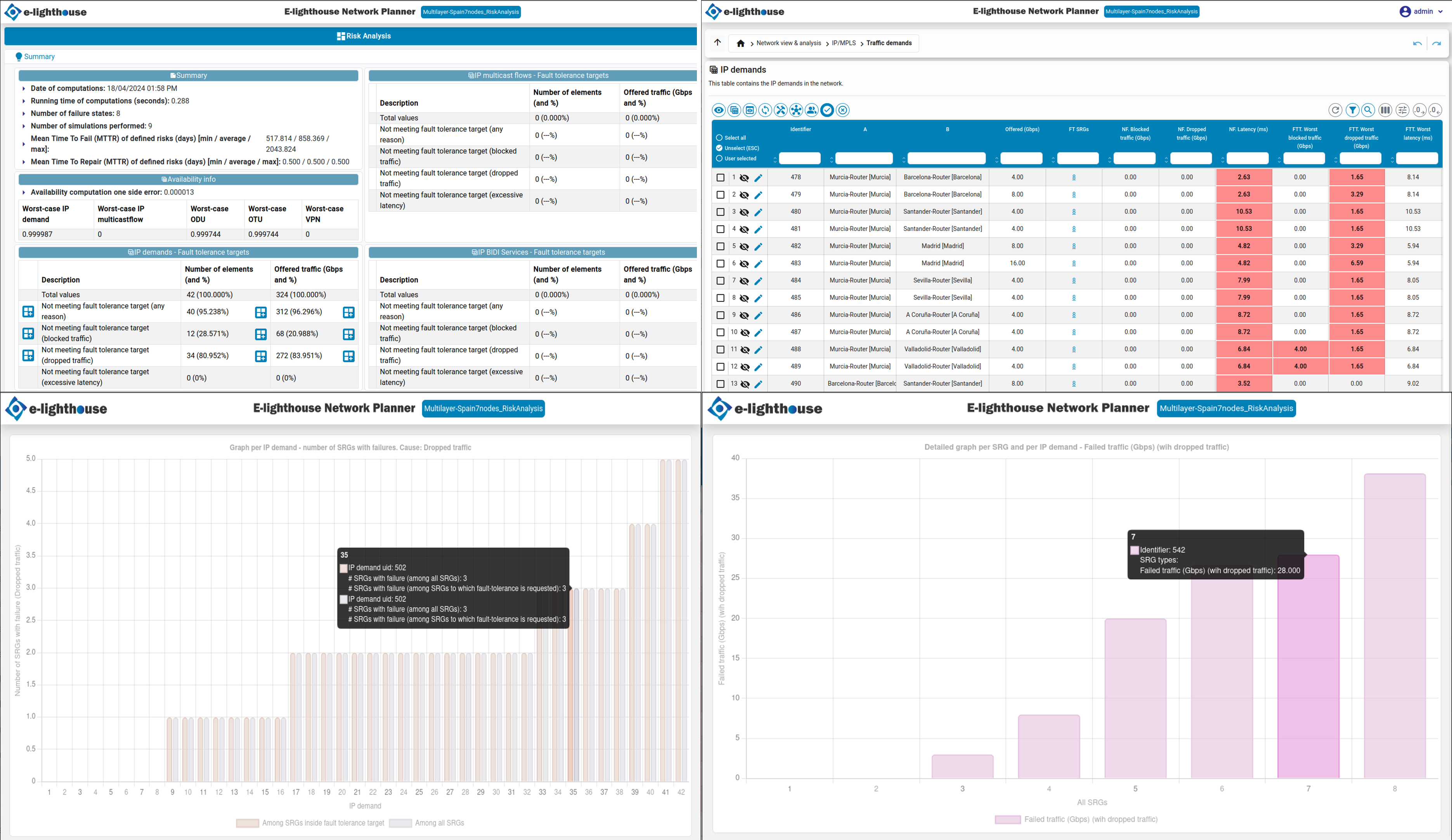
Depending on the deployment, ENP can integrate with:
- SDN controllers through supported standard interfaces such as
IETF:networks(RFC 8345) - transport controllers through interfaces such as Transport API (TAPI)
- commercial SDN controllers that implement one of the supported interfaces
- NMS and monitoring systems
- OSS and BSS platforms
- customer-specific import or export workflows
This is important for end users because the design you see in ENP may come from live or curated operational data, not only from manual input.
When this controller-ingestion workflow is offered in Network Planner, it should be considered an optional module that must be enabled in the deployment.
See SDN controller integration for the simulation-oriented view of this capability.
Where To Go Next
- To learn the interface: GUI overview
- To start using the product: Common tasks
- To understand advanced analysis: Network Digital Twin